Official launch of membership
Slovenian foreign policy this year and in the coming year will focus on the country's membership of the UN Security Council, which officially began on 1 January. As one of the ten non-permanent members, it will have the opportunity to shape responses to key security issues addressed by the world organisation's highest body. Membership will present Slovenia with many challenges, such as finding solutions for Gaza and its people, developing an independent voice, keeping a focus on the war in Ukraine, understanding the problems of remote parts of the world, managing organisational pressures and others.
-
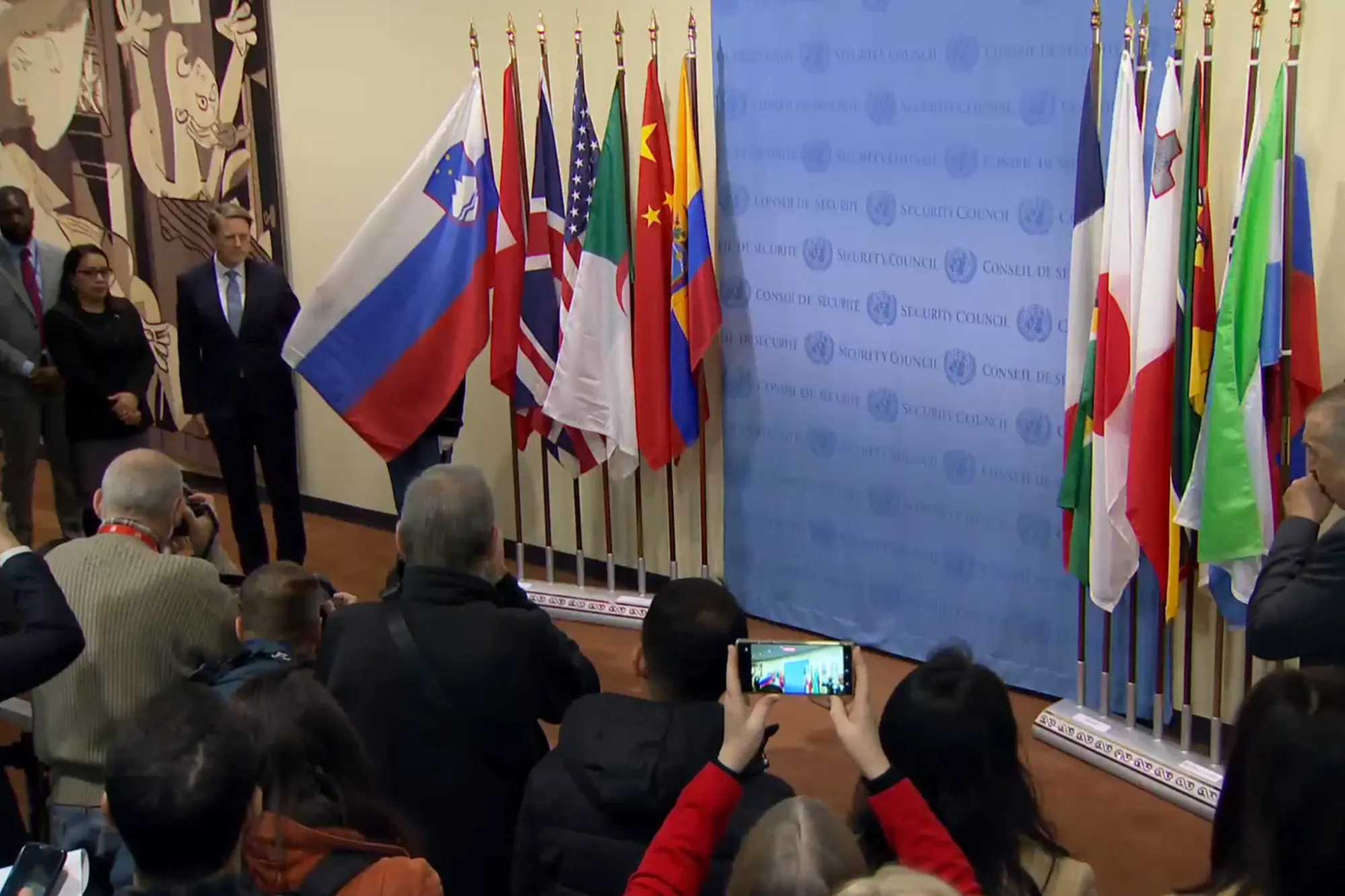
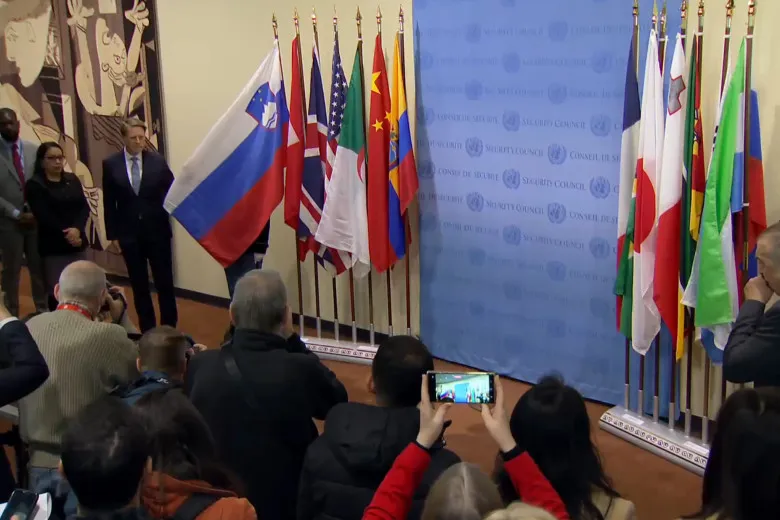 In addition to the Slovenian flag, the flags of Algeria, Guyana, South Korea and Sierra Leone were also flown. These countries were elected by the UN General Assembly last June for the 2024-2025 mandate, and each of the ambassadors gave a short speech before carrying and placing their country's flag in its designated place. Photo: Robi Poredoš/STA
-
 On 1 January 2024, Slovenia becomes a non-permanent member of the United Nations Security Council for the second time in its history. Photo: Ukom Archives
The politics of peace
Slovenia will act as a force for good, remain committed to building trust and will represent global awareness, Ambassador Samuel Žbogar assured at the ceremony, adding that Slovenia will cooperate with all UN Member States, the UN Secretary-General, peacekeepers, humanitarian workers, UN agencies, in short, with everyone in the search for peace and the protection of civilians.
He added that during his mandate, Slovenia would like to see more emphasis on conflict prevention, protection of civilians, women's rights, climate and water security.
-
 Logo of Slovenia's membership of the United Nations Security Council.
Balanced international relations and protection of the most vulnerable
Slovenia starts its term in the SC during the French Presidency. Member States hold the presidency for one month, in alphabetical order, and are responsible for the monthly work programme, chairing meetings, adopting resolutions, statements and press releases. Slovenia will preside over the UN Security Council in September.
Before the flag-raising ceremony, Slovenia attended its first meeting of the mandate at the Security Council in the morning to present France's work programme. In January, France plans to put particular emphasis on the situation in the Middle East, Ukraine, West Africa and the Sahel. Together with the EU Member States Slovenia and Malta, it will defend the EU's position on the issues on the agenda and intends to ensure the participation of representatives of civil society organisations and women.
The most important role is played by the five permanent members - USA, Russia, China, UK, France - which have veto power, and this year the Security Council will include Japan, Switzerland, Malta, Mozambique and Ecuador, in addition to the countries elected last year.
This is the second time Slovenia is a member of the UN Security Council. The first time was in 1998-1999.